

Quantum Community at Amsterdam Science Park
The Quantum Revolution.
Quantum technology and quantum computing
Quantum technology and quantum computing hold enormous potential for research and business in a wide variety of fields and economic sectors. At Amsterdam Science Park, several organisations play an important role in their further development. They come together in several dedicated institutes and hubs such as QuSoft, Quantum.Amsterdam and the Quantum Application Lab. In addition, the Netherlands as a whole is a leading centre for the development of quantum hardware and the accompanying algorithms and applications – a position that’s underlined by the government’s National Agenda for Quantum Technology.
-
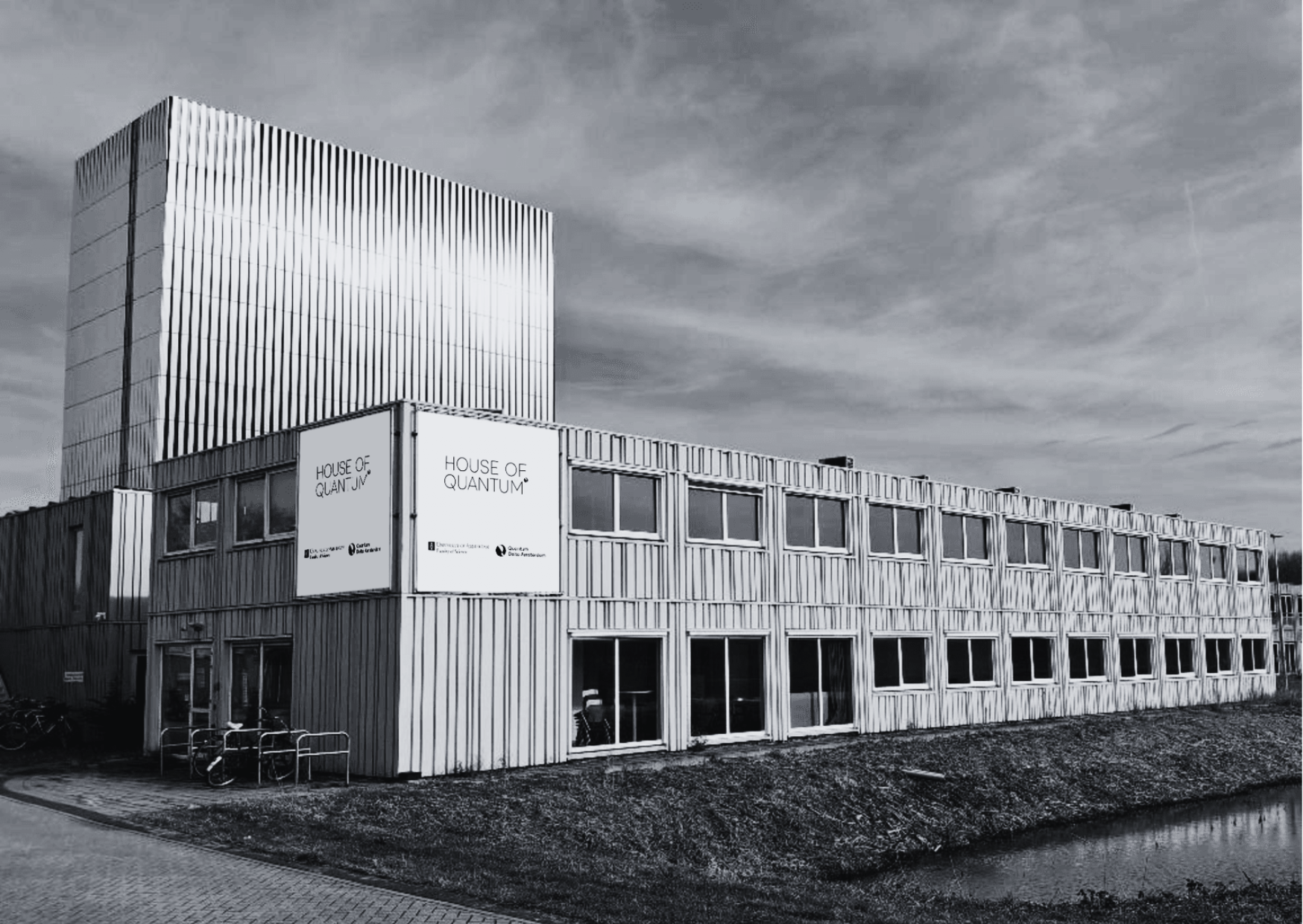
House Of Quantum
HoQ offers interconnected labs, makerspaces and workspaces for the quantum community all over the Netherlands. The first HoQ locations have opened their doors in Delft, and more buildings will soon follow.
If you’re interested in joining, don’t hesitate to reach out! We have limited spots available, plus a growing waitlist for our upcoming locations. -
Quantum Delta
Quantum Delta NL is well-positioned to contribute to a historic opportunity in quantum by accelerating quantum technology developments in the Netherlands and establishing a collaborative ecosystem that fosters international collaborations with the world's top scientific institutions, businesses, students, and professionals.
Together, We Unlock Quantum’s Transformative Potential.
-
Quantum.Amsterdam
The quantum innovation hub
Quantum.Amsterdam was founded by the Dutch research center for quantum software QuSoft, Centrum Wiskunde & Informatica and the University of Amsterdam. The hub’s mission is to connect academia, industry and society by facilitating knowledge exchanges and innovation. It is one of the five official hubs of Quantum Delta NL.
-
[QAL] Quantum application lab
Quantum application development and use-case evaluation
For organizations with computational challenges in optimization, simulation and machine learning.
-
QuiX Quantum
Delivering quantum powerful and deployable at scale
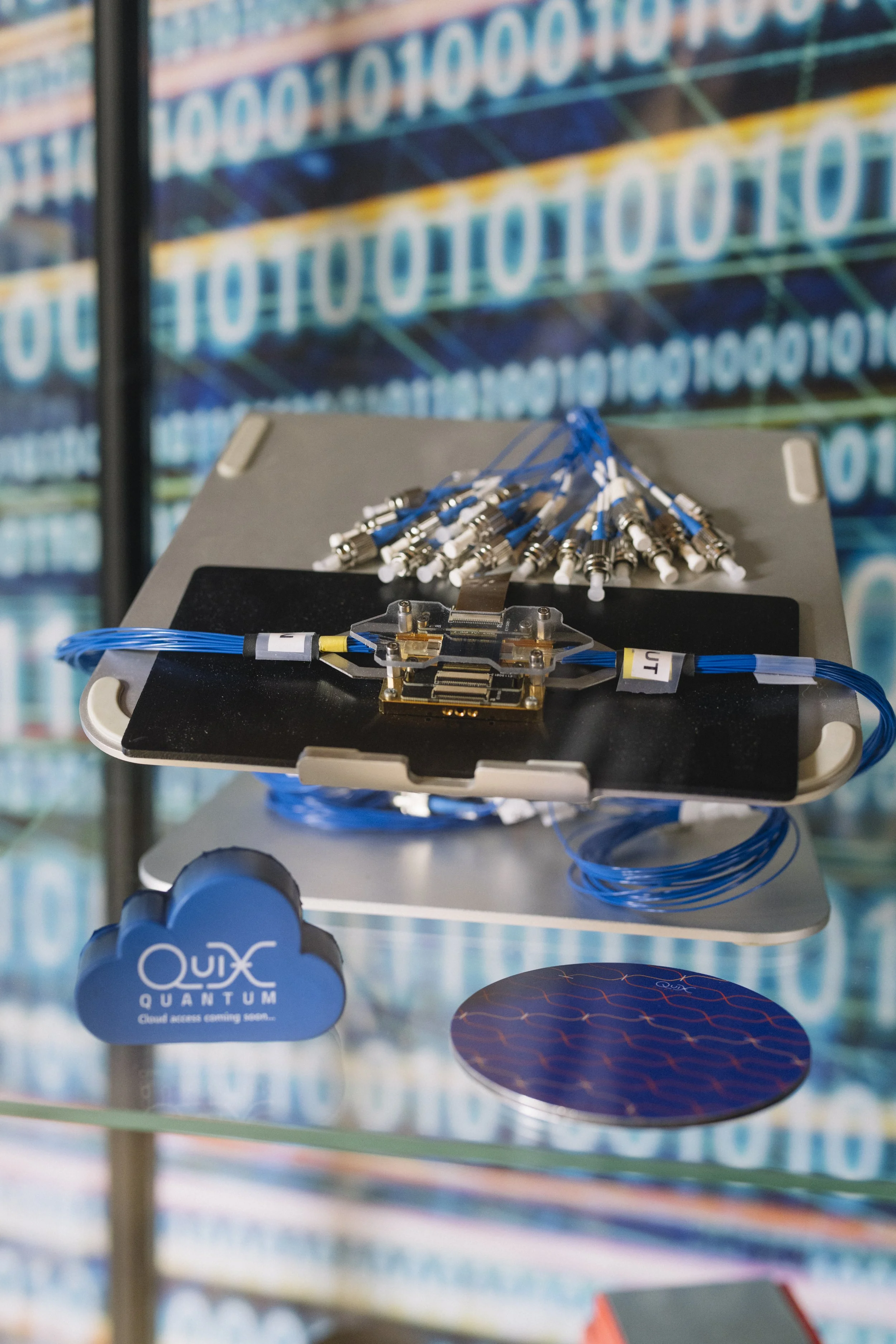
QuiX Quantum is Europe's leading quantum computing company based on photonics. Founded in Enschede (NL) in 2019 with office expansion to Amsterdam Startup Village (NL), Ulm (DE) and Stuttgart (DE) in 2022. We are a fabless, horizontally integrated company, focusing on quantum computing using integrated photonics.
The quantum innovation hub Quantum.Amsterdam, located at the Science Park’s Startup Village and established by the UvA, CWI and QuSoft, is one of the five innovation hubs of the national public-private foundation Quantum Delta NL. It aims to boost quantum research and development in the Amsterdam ecosystem. Working with research institutes, companies and the City, Quantum.Amsterdam acts as liaison to the national activities in the field, connecting academia, industry and society in the Amsterdam Area.
Business innovation
The Amsterdam Science Park has sparked numerous partnerships between industry and academia, and knowledge is regularly shared between researchers, innovative startups and established businesses. One of these recent collaborations was a two-year programme of Bosch and QuSoft, in which researchers investigated potential quantum computing use cases at Bosch, with a focus on applications in engineering and AI/machine learning.
Co-creation at the Science Park
Discover other focus areas and learn how co-creation opportunities take scientific findings from idea through concept to completion.
Industries benefitting from quantum computing
Because of the ability of quantum computers to solve much more complex problems than classical computers – even supercomputers – they have the potential to make major contributions to a vast number of fields and across all economic sectors. Creating better algorithms for optimisation problems, for example, can have many useful applications in business. A quantum computer that can simulate the behaviour of molecules can help develop new medicines, better batteries, healthier food and more efficient fertiliser. Quantum computing can be crucial for the development of new materials and sensors. And quantum cryptography can mean giant leaps in information security.

Quantum research and areas of specialisation
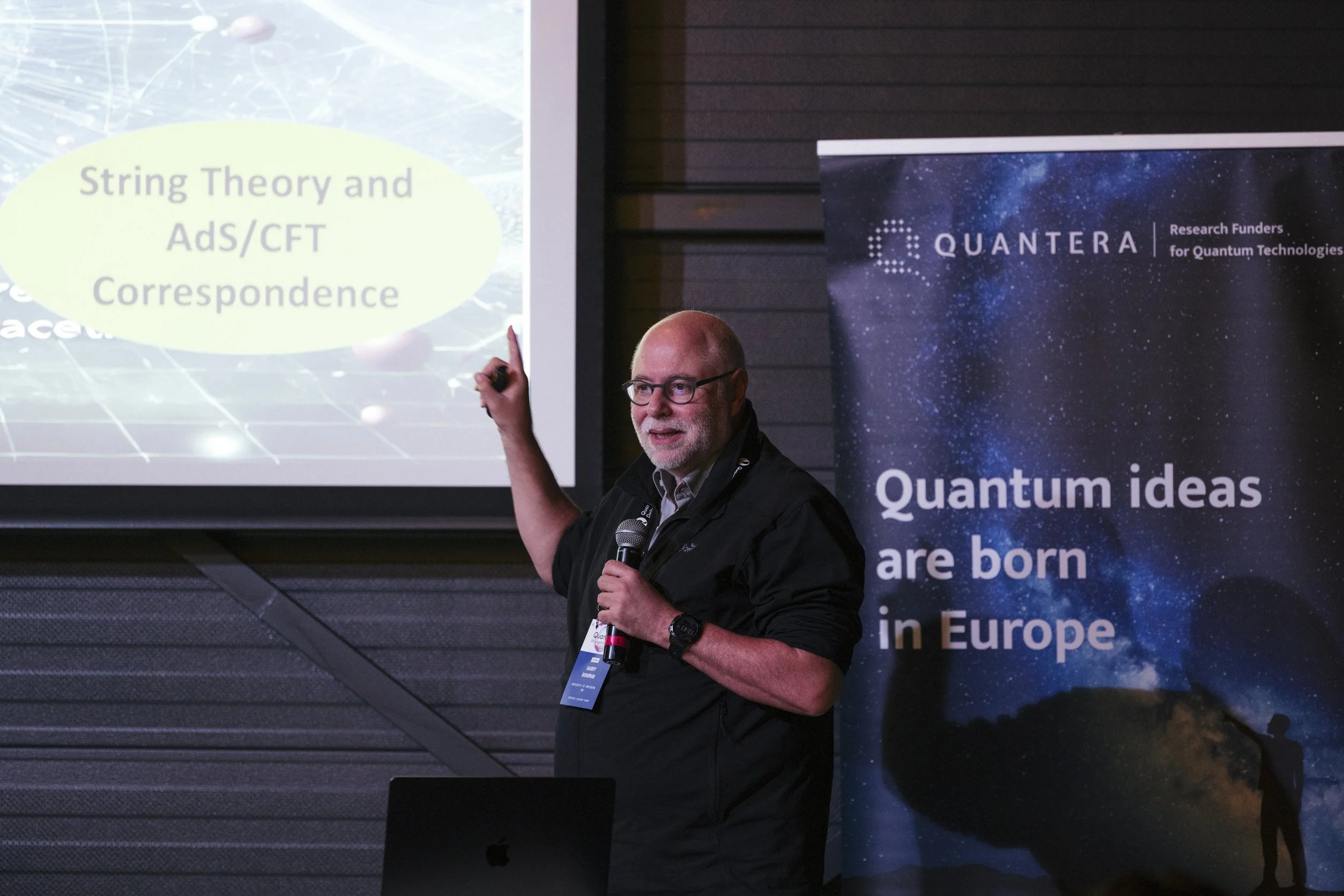
For research, quantum computing is significant because its study has led to a better understanding of the fundamentals of computing as well as physics. In addition, one of the expected applications of quantum computers is the creation of efficient algorithms to simulate quantum mechanics systems – which could have wide-ranging impacts in academic as well as industrial research.
Some of the earliest work on the theoretical computer science aspects of quantum computing took place at CWI at Amsterdam Science Park, and so it is fitting that the Park is now home to QuSoft, a research institute dedicated to developing quantum software. It was founded in 2015 as a joint initiative of the University of Amsterdam (UvA) and CWI. But there’s yet another advantage of the Science Park for those working on quantum technology and computing. Quantum computing is a fundamentally interdisciplinary field, requiring knowledge of physics, computer science and mathematics, as well as expertise in additional fields – for example, research is being conducted on the legal implications. This makes the Science Park, with its presence of many experts from different backgrounds and strong focus on cross-sector partnerships, a natural home for it. Some experts have positions at several organisations – for example, researchers from the UvA’s theoretical physics department also work at QuSoft –, further encouraging collaboration.
The presence of the UvA’s Faculty of Sciences and the Vrije Universiteit also adds a focus on education in this emerging field. New programmes have been set up, including the UvA’s QuSoft Master’s Certificate for MSc students. The CWI’s outstanding international reputation allows it to attract the best students internationally.
SURF to host European quantum computer at Amsterdam Science Park
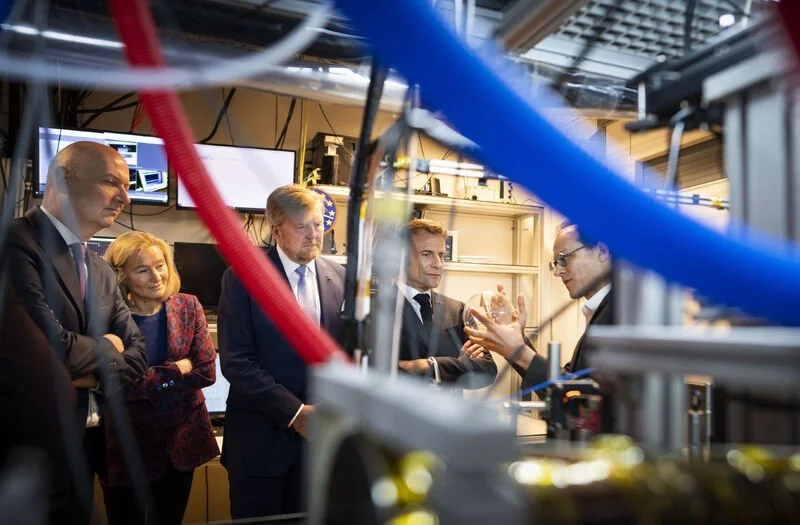
SURF, in collaboration with the EuroHPC initiative and Quantum Delta NL, will host a European quantum computer at Amsterdam Science Park. This quantum computer, positioned alongside the national supercomputer Snellius, will form a unique hybrid infrastructure, combining quantum and classical computing capabilities. This development strengthens the Netherlands’ leadership in quantum technology, offering advanced computational tools for complex scientific research, from climate modeling to protein studies. Utilizing semiconductor qubits, this quantum system is poised to accelerate innovation across diverse sectors such as healthcare and energy.
This project is part of a wider European collaboration involving institutions from multiple countries, reinforcing Europe’s ambition to advance quantum technology. The quantum computer will enhance research capabilities and drive industrial advancements through the EuroHPC program.
Partnerships
Several partnerships further advance the field of quantum computing at Amsterdam Science Park. Businesses and other organisations can approach the Quantum Application Lab (QAL) to explore the advantages of quantum computing. The QAL is a public-private R&D partnership that offers a platform featuring a team of scientists, researchers, engineers, application developers, and software and hardware specialists. Organisations wanting to find out how quantum computing can benefit their operations are invited to connect to the lab and make use of its expertise and technical infrastructure. The six QAL partners are the UvA, the Netherlands Organization for Applied Scientific Research (TNO), CWI, SURF, TU Delft (on behalf of QuTech and Quantum Inspire) and the Netherlands eScience Center.
Partner up with talent, researchers or startups to develop new projects an breaktroughs